Pairing Belts with Shoes and Outfits: A Practical Guide
2025-10-28 · 5 min read · By Guiding Style
The belt-and-shoes matching rule is fashion's most repeated guideline for a reason: it works. But like any rule, understanding why it works helps you know when to bend it.
The basic rule: match leather to leather
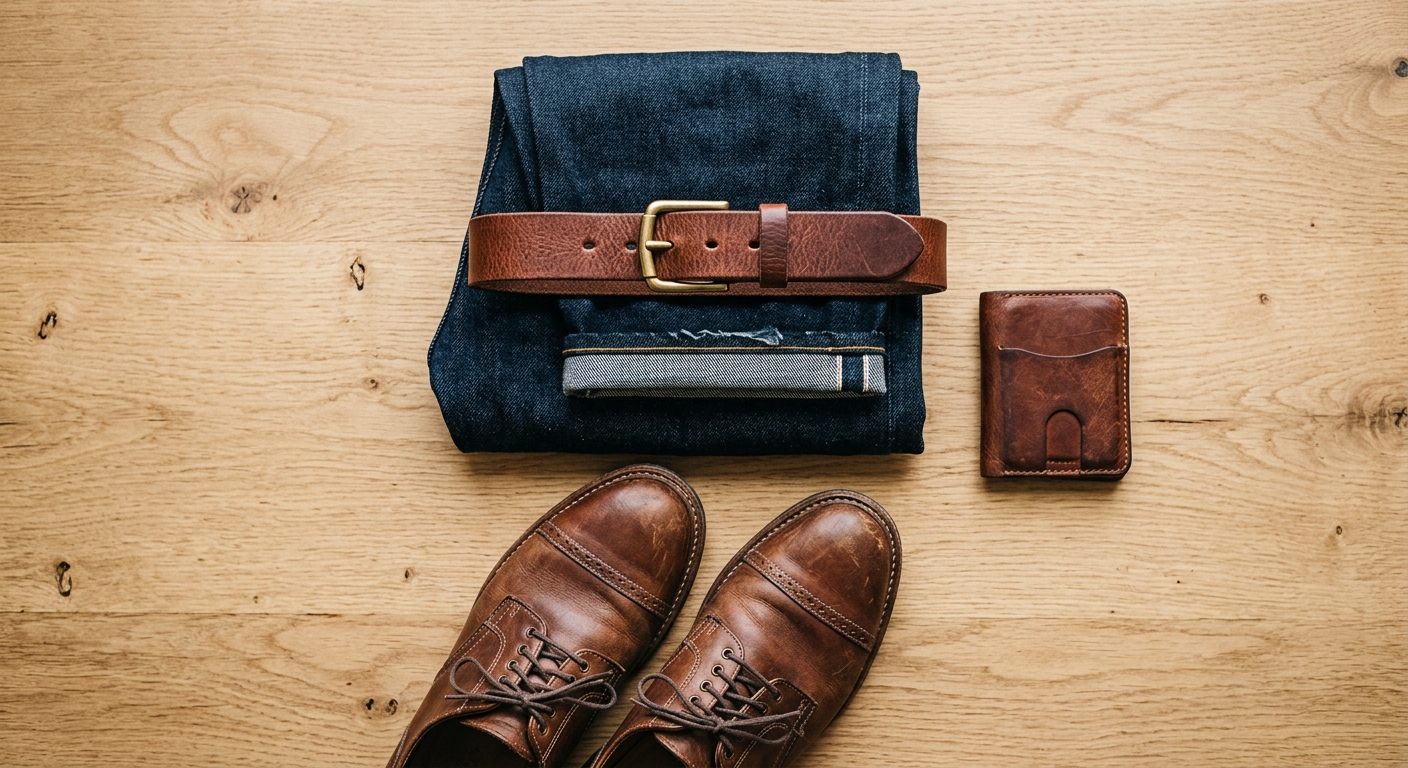
Black belt with black shoes. Brown belt with brown shoes. The shade doesn't need to be identical, but it should be in the same family — dark brown with dark brown, tan with tan. The buckle finish should also harmonize: silver with silver, gold with gold.
Professional and formal wear
For suits and dress pants, choose a slim leather belt (1.25–1.5 inches wide) with a simple, polished buckle. A full-grain black or dark brown belt covers 90% of professional situations. Avoid braided or distressed leather in formal settings — they read as casual.
Smart casual: chinos and blazers
This is where you have room to play. A brown leather belt with chinos and a navy blazer is a classic combination. Suede belts work well here too — the texture adds interest without being loud.
Weekend and casual wear
With denim, canvas, or shorts, the rules relax. Braided leather, canvas webbing, and D-ring belts all work. Match the belt to the overall tone of the outfit rather than to a specific shoe — with white sneakers, almost any casual belt looks right.
When to break the rule
If you're wearing monk straps or loafers without a belt, you don't need one. Suspenders and belts should never be worn together. And with heavily distressed or vintage-style outfits, a perfectly matched belt can look too studied — a slightly worn-in belt with character fits better.